Getting a Website Built in Germany and the Netherlands: A Guide for Turkish-Owned Businesses
What should Turkish-owned businesses in Europe check before ordering a website, mobile app or custom software? A practical guide to language, legal requirements, contracts and delivery.
Summary
What should Turkish-owned businesses in Europe check before ordering a website, mobile app or custom software? A practical guide to language, legal requirements, contracts and delivery.
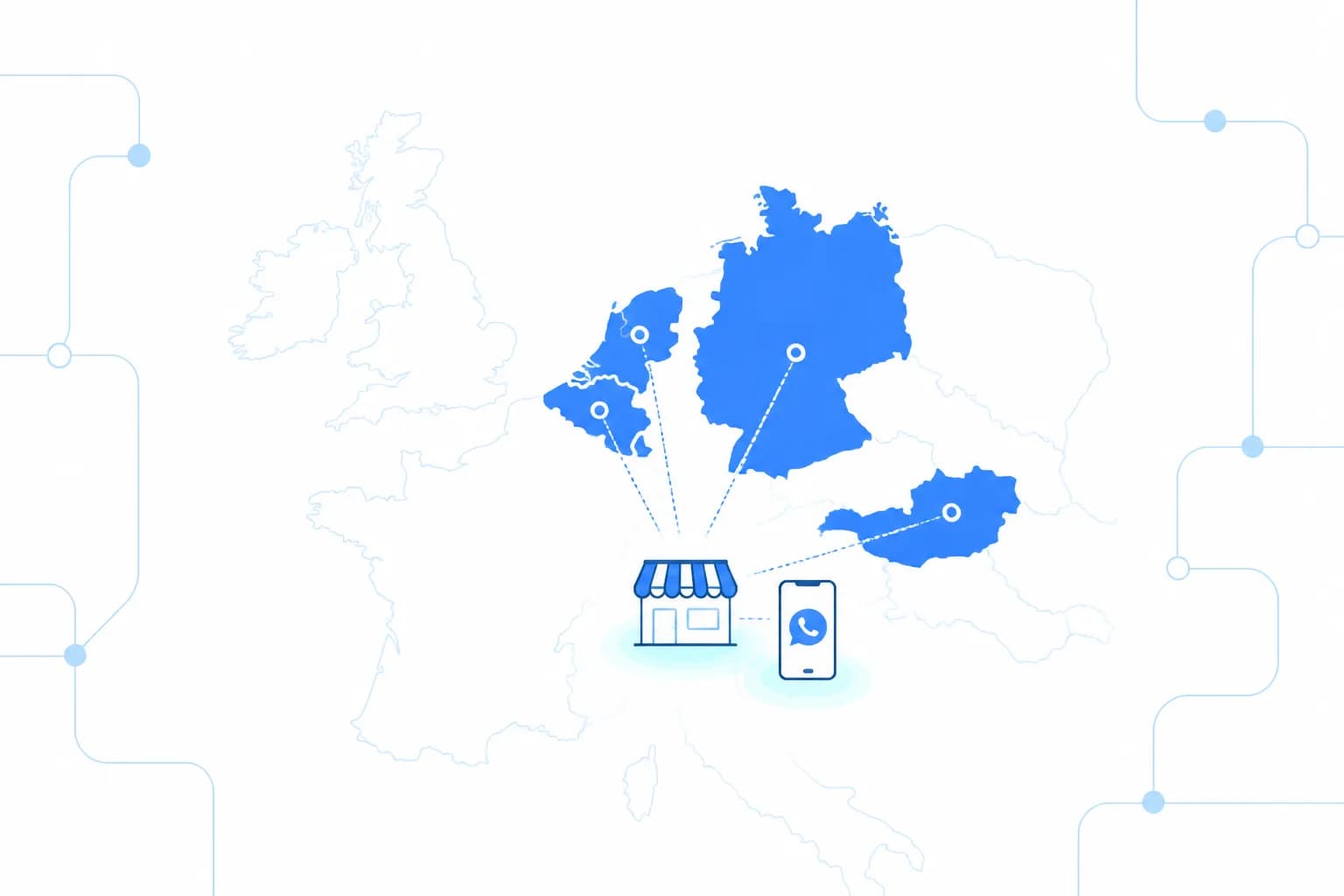
If you run a restaurant, hair salon, construction company, grocery store or consultancy in Germany, the Netherlands, Austria or Belgium, most of your customers look for you online first. Booking by phone, asking for a price on WhatsApp and searching Google for "near me" are now part of everyday business.
Even so, many business owners get stuck at the same point when it comes to website development: with a local agency, language and expectations do not always match, while with a company based in Turkey there is often uncertainty about contracts, invoicing and European legal rules. In this article we go through the questions a Turkish-owned business in Europe should settle before ordering a website.
1. Start by defining what you need
"We need a website" can mean very different things. Answering these questions first makes it easier to compare offers and plan the project properly:
- What should the website do? Only present your business, or also take bookings, collect orders or sell products?
- Who are your customers? Only Turkish-speaking customers, or also German- or Dutch-speaking ones?
- How do you handle this today? Are bookings kept in a notebook, are orders getting lost in WhatsApp chats? A website is often the best opportunity to bring order to this.
Sometimes the need goes beyond a website: custom software such as a booking system or online ordering screen, a mobile app for your customers, or an online shop. Knowing this from the start saves you from rebuilding the website later.
2. Language: Turkish, the local language, or both?
Most Turkish-owned businesses in Europe serve two audiences at once. That is why a multilingual website is usually the most sensible choice: Turkish plus the language of the country you operate in (German, Dutch or French).
The local-language text must not read like a machine translation. Local customers judge how serious your business is while reading your website, so having the translations checked at native level matters for the first impression.
3. Do not skip the European legal requirements
Business websites in the European Union have to meet certain legal requirements. The most common ones:
- Impressum (legal notice): In Germany and Austria in particular, your business details must be clearly shown on the website. In Germany the core rule is Section 5 of the Digitale-Dienste-Gesetz.
- Privacy policy and GDPR: If your website uses forms, analytics or cookies, you must explain how personal data is processed. The official text: EU General Data Protection Regulation (GDPR).
- Cookie consent: Analytics and advertising cookies require the user's consent. For background, see the European Commission's data protection page.
If these are missing, you may receive formal warnings (in Germany: Abmahnung) from competitors or lawyers. That is why the company building your website should know the European rules and set the site up accordingly. We recommend asking a legal advisor about the content of your legal texts.
4. Get the scope, offer and delivery date in writing
Most problems in website projects come from expectations that were never made clear. Before you start working with a company, make sure the following is in writing:
- Scope: How many pages, which languages, which features (forms, bookings, orders, blog, etc.)
- Delivery date: Which stage of the project is delivered when
- Revisions: How many rounds of changes are included for design and content
- Ownership: Who owns the domain, hosting and the website's source files
- Afterwards: How updates, maintenance and technical support are handled
Working with a company registered in the European Union makes contracts and invoicing simpler and keeps your accounting and tax processes in line with the rules of your country.
5. Mobile-friendliness and speed are no longer optional
Most of your customers will visit your website on their phone. Whether the site is easy to read on a phone, loads quickly and lets visitors call you or send a WhatsApp message with one tap directly affects how many customers you win. When comparing offers, open example projects on your own phone; you can also measure a site's speed with Google's free PageSpeed Insights.
6. Set things up correctly for Google from day one
Being found on Google is not something you add after launch; it starts with how the site is built. Proper page titles, clean separate URLs for each language, a linked Google Business Profile and fast-loading pages all directly affect the results of future SEO or Google Ads work.
How to choose the right company
When comparing offers, look beyond the price:
- Can the company communicate comfortably in a language you understand?
- Can it show real projects?
- Does it give you the offer and delivery date in writing?
- Does it know the European legal requirements?
- Does it keep supporting you after launch?
How we work at Kordevo
Kordevo Soft is a software company registered in Poland. We build business websites, mobile apps and custom software for companies across Europe, and we communicate with our clients in Turkish as well. Every project starts with understanding the need; scope and delivery date are set out in a written offer and contract. You can see our work on our projects page.
If you have a business in Germany, the Netherlands, Austria or Belgium and are thinking about a website, a mobile app or a system built for you, get in touch. We first listen to how your business works today, then decide together what fits.